
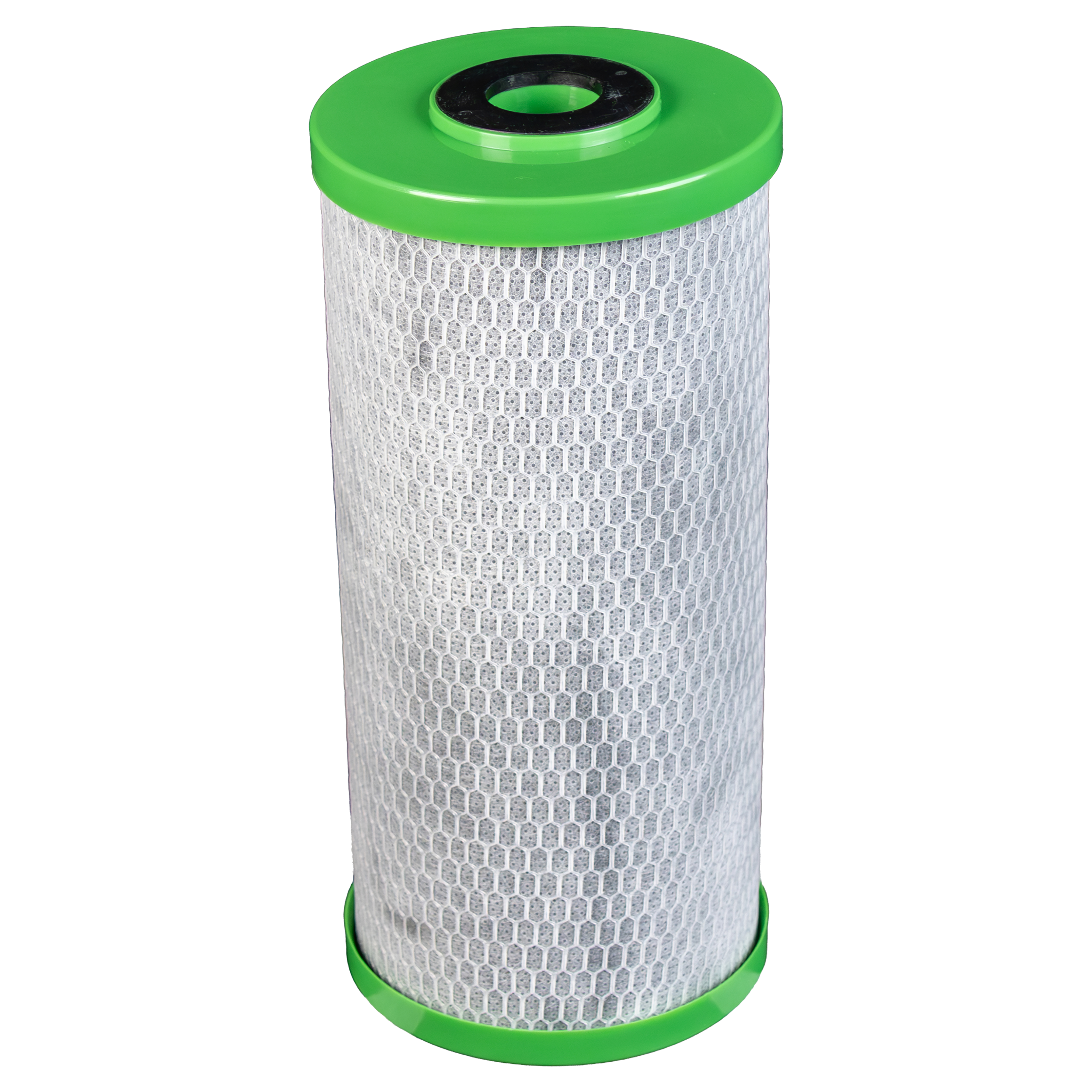
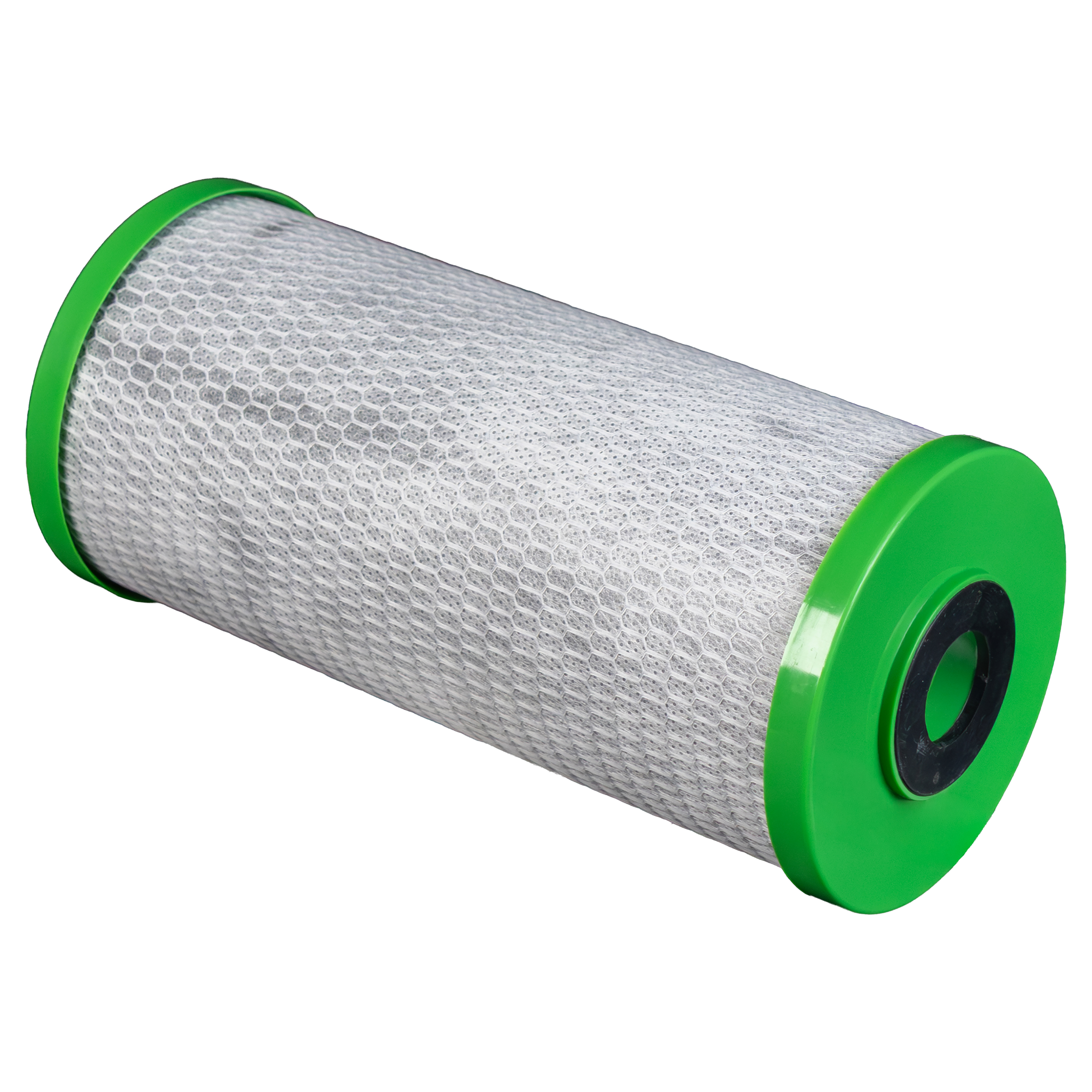
SPECTRUM Whole House Health 10″ Filter Cartridge
- Ideal for whole house / large diameter systems
- Reduces chlorine, taste and odour
- Reduces heavy metals and chloramine
- Protects downstream appliances
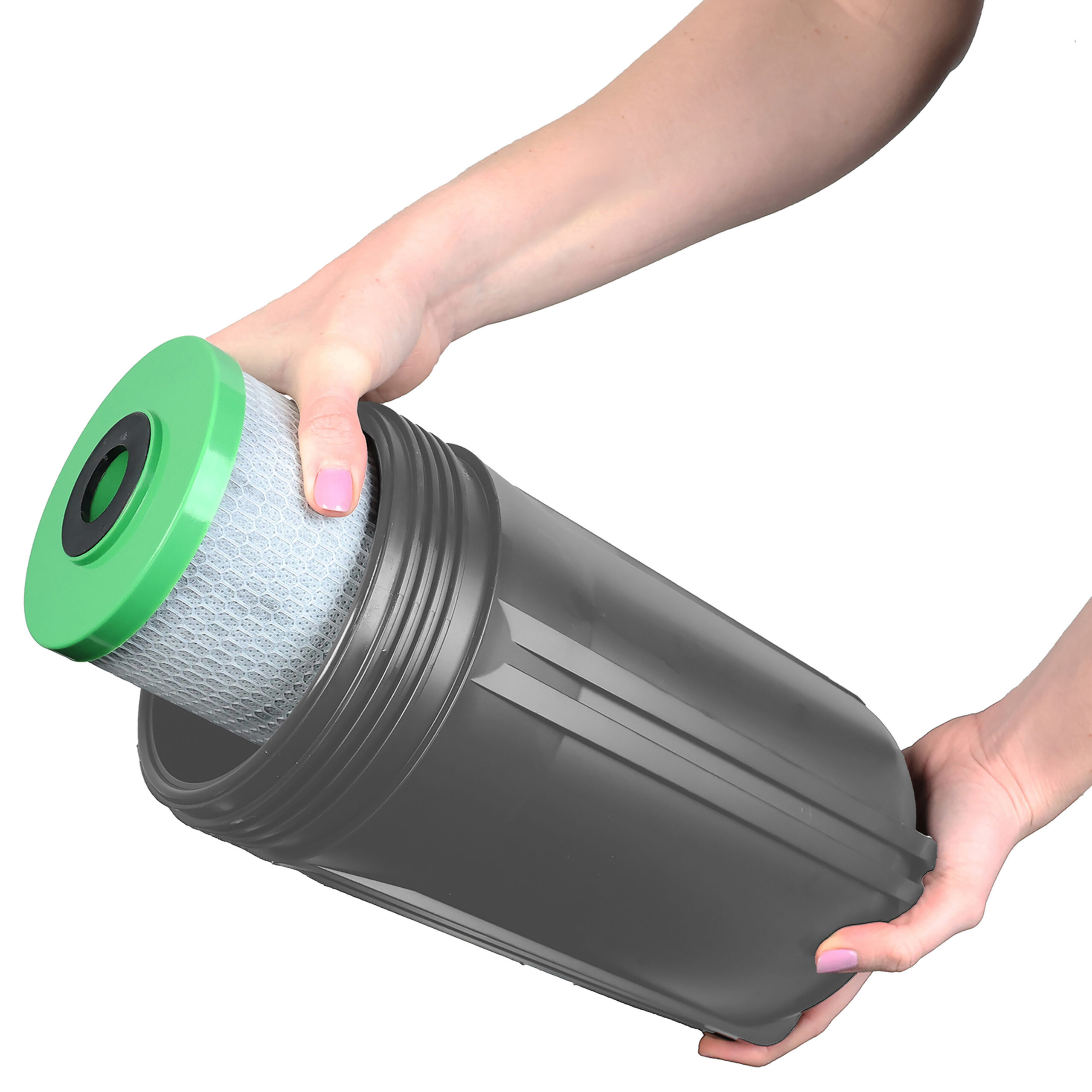
- Easy to replace
Step-by-step process of replacing and installing a SPECTRUM Whole House Health 10″ Filter Cartridge, download here
Features & Information
Improve water quality throughout the home with this advanced large diameter 10″ carbon block cartridge. Designed to reduce chlorine, unpleasant tastes and odours while targeting a wider range of contaminants, this cartridge delivers cleaner, better-quality water to every tap. Suitable for whole house applications, it helps support appliance performance and overall water quality across the system. Easy to install and replace, it’s a reliable solution for consistent, high-performance filtration.
FAQs - Whole House Health 10" Filter Cartridge
Both Health and Taste filters use activated carbon to improve your drinking water, but they’re designed with different priorities in mind. Taste filters focus on reducing chlorine, unpleasant tastes and odours (CTO) for fresher-tasting water, while Health filters also reduce selected contaminants of health concern, alongside chlorine, taste and odour. If your main priority is better-tasting water, choose Taste. If you want broader contaminant reduction as well, Health is the better option.
The replacement frequency depends on water quality and usage. Generally, it is advisable to replace the cartridge as per the manufacturer’s recommended service life, which can vary. For the health cartridge, this is typically around 6-12 months, but it may vary based on water conditions.
Carbon filters work by utilising activated carbon, a highly porous material with a large surface area. When water passes through the carbon filter, contaminants come into contact with the activated carbon. The contaminants are either adsorbed onto the carbon’s surface or undergo chemical reactions that neutralise them. This process effectively removes impurities such as chlorine, volatile organic compounds (VOCs), odours and some heavy metals, resulting in cleaner and purer water.